
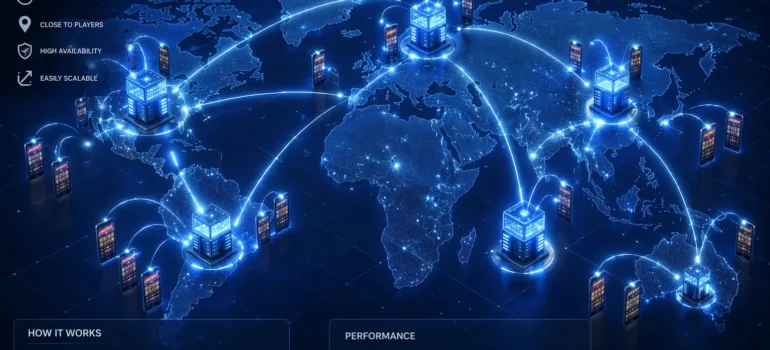
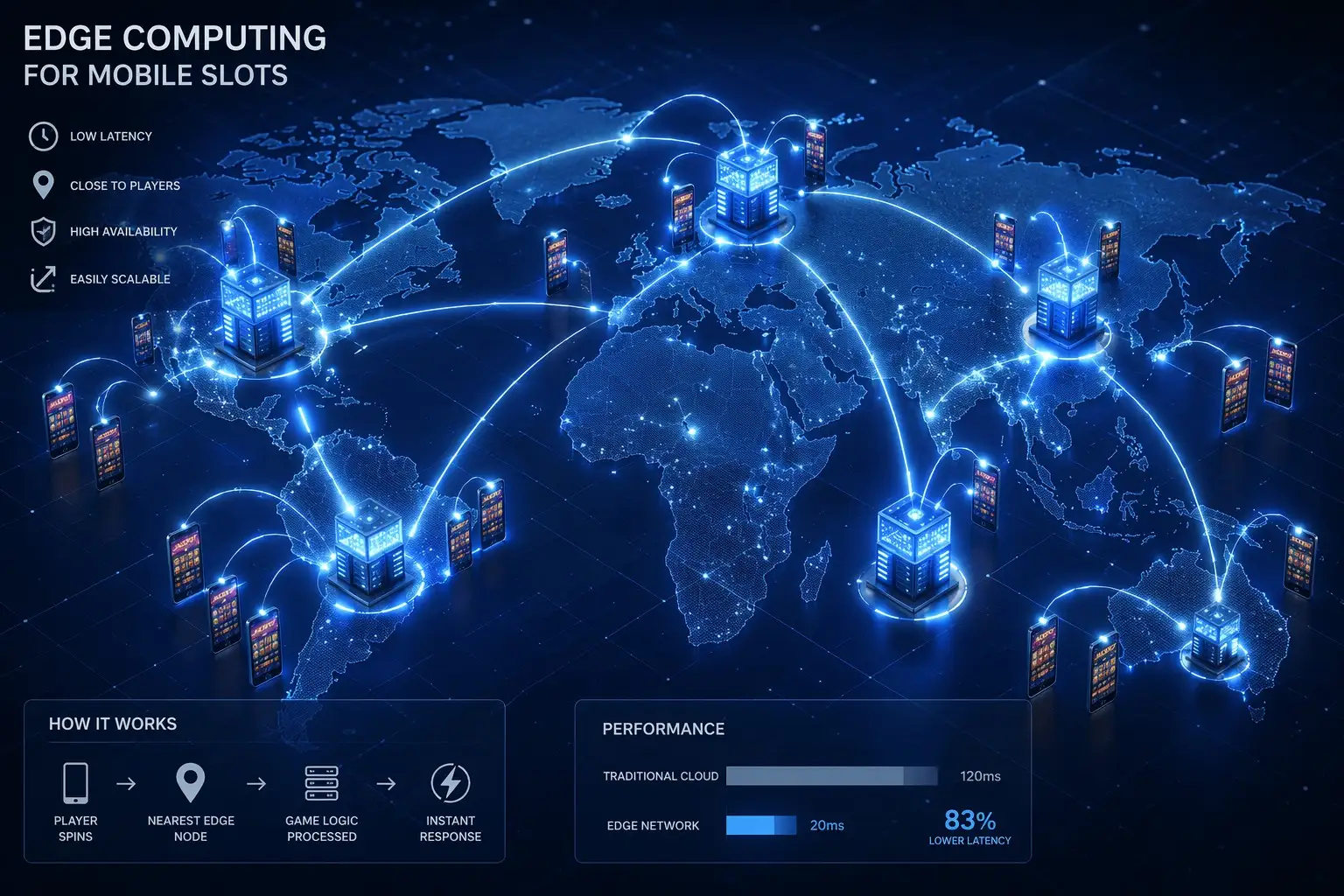
The centralized server model is reaching its physical limits. When a player in Manila interacts with a server in Malta, the laws of physics dictate a minimum delay that can ruin the experience of a high-fidelity 4K slot game. In 2026, Edge Computing iGaming has become the “Liquidity for Data.” At DYG, we have decentralized our core game engine, pushing the “Reel Logic” and “VFX Triggers” to the edge of the network. The result? A smoother, faster, and more reliable experience for players globally.
The Latency Problem: Why Centralization Fails in 2026
As iGaming visuals evolve toward 4K cinematic rendering, the data load on mobile networks has skyrocketed. On a traditional centralized architecture, every single user action—from a bet adjustment to a spin trigger—must travel through the global internet backbone to a central data center and back.
In regions with fluctuating infrastructure (like rural Brazil or island nations in SEA), this creates “Packet Jitter.” Players experience lag, spinning reels that never stop, or missing bonus animations. This friction leads directly to Bounce Rates—if a game takes more than 3 seconds to respond, 40% of players will close the app. Edge Computing solves this by placing the processing power within the same metropolitan area as the player.
How DYG’s Edge Architecture Works
To deliver a premium OEM experience, DYG has implemented a **Multi-Tier Edge Stack**.
1. Regional “Micro-Hubs”
We utilize a global network of specialized micro-data centers. These hubs hold a cached version of the game’s visual assets and handle the initial “Handshake” logic. When a player hits “Spin,” the request is handled by a hub less than 100 miles away, reducing the RTT (Round Trip Time) from 300ms to under 20ms.
2. Fog-Computing for Graphics Optimization
DYG’s 2026 engine features Fog-Computing Layering. This technology detects the player’s device capabilities and network speed in real-time. If the edge hub detects a weak 4G connection, it automatically downscales the texture quality at the source, ensuring that the 60FPS gameplay remains constant. This “Intelligent Edge” approach is why DYG games run faster than generic clones in high-traffic regions.
3. Stateless Game Logic Synchronization
Security is maintained by keeping the “State of Truth” on the core server while delegating the “Action Logic” to the edge. The edge hub processes the spin and renders the result instantly to the player, while simultaneously synchronizing the financial balance with the core ledger in a background, high-priority tunnel. This provides the Speed of the Edge with the Security of the Core.
B2B Operator Advantages: Scalability Without Stress
For B2B operators, the move to Edge Computing means their platform can handle sudden traffic surges—such as during a major sporting event or a viral social media promotion—without the risk of a “Global Blackout.”
- Unlimited Horizontal Scale: If traffic in a region doubles, we simply provision more edge nodes in that specific geography.
- Reduced Bandwidth Costs: By processing data locally, we reduce the amount of redundant traffic traveling across expensive transcontinental cables.
- Improved SEO/GEO Signals: Google’s 2026 algorithms increasingly prioritize Core Web Vitals from local regions. Faster local load times directly improve your ranking in localized search results.
Standard Architecture
Latency: 150ms – 400ms
Reliability: Dependent on ISP Backbone
User Experience: Potential for “Spin-Lag”
DYG Edge Stack
Latency: < 30ms Global Average
Reliability: Multi-Node Redundancy
User Experience: Native-App Fluidity
Conclusion: The Speed of Trust
In the iGaming industry, speed isn’t just a technical spec—it is a trust signal. A laggy game feels rigged. A fast, responsive game feels professional. Edge Computing for Mobile Slots is the only way to deliver this trust at a global scale. By partnering with DYG, you are gaining access to a Global Infrastructure designed for the high-demand regions of tomorrow.
Want to eliminate lag in your target market? Ask for a latency report for your region from our infrastructure team today.