For decades, online slots and casino games were largely solitary activities. A player would log in, spin a reel, and win or lose in isolation. However, the rise of social media, streaming culture, and multiplayer video games has fundamentally changed player expectations. By 2026, the Social iGaming Evolution is in full swing. Players no longer just want to win money; they want to win *together*, or better yet, beat their friends and peers in a public arena.
For B2B platform providers, integrating these community-centric features into casino tournaments OEM design is no longer optional-it is a critical driver of engagement and organic growth.
The Shift: From Solitary to Social
The motivation behind gaming is shifting. While the “big win” remains a primary draw, the “social win”-gaining status within a community-is becoming equally important. Gen Z and Millennial players, in particular, value shared experiences. If they hit a jackpot, they want to share the replay instantly or see their name rise to the top of a global leaderboard.
The Power of “Shared Luck”
“Multiplayer Slots” are a burgeoning trend. In these games, players sit at a virtual “bank” of slots. When one player triggers a bonus round, everyone at the table gets to participate. This creates a “we’re in this together” atmosphere that mimics the energy of a busy land-based casino floor.
Key Social Features in Modern OEM Design
Building a social gaming platform requires more than just adding a chat box. It requires deep integration of social mechanics into the core game loop.
1. Real-Time Tournaments and Leaderboards
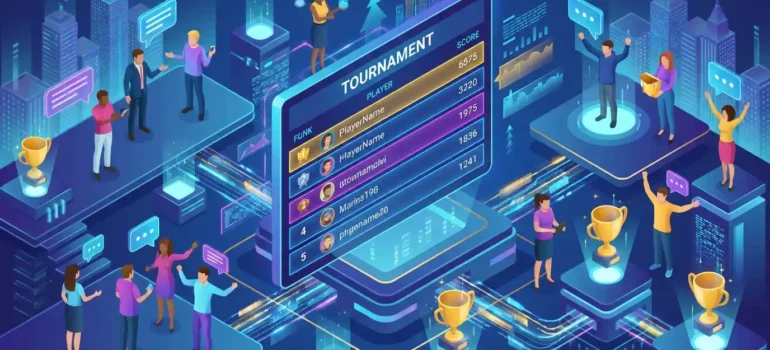
Tournaments are the most effective way to foster competition. Modern social iGaming platforms support:
– Instant Tournaments: 5-minute sprints that start as soon as 10 players join.
– Scheduled Marathons: Week-long events with massive prize pools and tier-based rewards.
– Micro-Leaderboards: Comparing your performance only against your “Friends List” or “Country.”
2. Community Events and “Boss Battles”
Collaborative gaming is a massive retention tool. In a “Boss Battle” slot, every spin by every player in the community contributes damage to a shared enemy. Once the boss is defeated, everyone who participated receives a share of the “loot.” This creates a powerful daily reason for players to log in and help their “guild.”
3. Gifting and Social Currency
Allowing players to send small gifts-free spins, virtual items, or “luck boosts”-to their friends builds a sense of community. While these gifts often have low monetary value, their social value in building player loyalty is immense.
Market Data: The Impact of Social Features
The data clearly shows that social players are better players for an operator’s bottom line.
| Feature Type | Avg. Session Length | Daily Active Users (DAU) | Retention (Day 30) |
| :— | :— | :— | :— |
| Solitary Play (Baseline) | 12 Minutes | 10,000 | 4.5% |
| Leaderboard Integration | 18 Minutes | 14,500 | 7.2% |
| Gifting & Social Chat | 22 Minutes | 18,000 | 9.8% |
| Multiplayer / Boss Battles | 31 Minutes | 25,000+ | 14.2% |
By moving from solitary play to collaborative multiplayer models, operators can more than double their 30-day retention rates.
Integration with Social Media Platforms
In 2026, the boundary between the casino platform and social media is blurring.
One-Click Sharing
Integrating “Bragging Rights” features allows players to share video replays of their biggest wins directly to TikTok, Instagram, or X (Twitter). These organic posts act as free marketing for the operator, bringing in new players at zero acquisition cost.
Streamer Integration
Live streaming on platforms like Twitch and YouTube is a dominant force in iGaming. OEM designs now include “Streamer Mode,” which allows influencers to interact with their audience through the game UI, let viewers “vote” on game choices, or even join the streamer in a private tournament.
Technical Challenges: Scaling Social Interaction
From a technical perspective, social features are demanding.
Data Synchronization
When 5,000 players are participating in a 1-minute tournament, the leaderboard must update in real-time (sub-500ms). This requires a highly optimized backend using technologies like WebSockets and high-speed in-memory databases (Redis).
Toxicity Management
Community features also bring challenges, such as chat toxicity. Modern platforms utilize AI-driven moderation tools to automatically filter out harassment, scams, and inappropriate content, ensuring a safe and welcoming environment for all players.
Gamification: Beyond the Reels
Social iGaming is closely tied to gamification.
Leveling Systems and Trophies
Players earn experience points (XP) for every spin, unlocking new levels, custom avatars, and prestigious badges. These digital trophies provide a sense of progression that keeps players coming back even during losing streaks.
Seasonal Passes
Borrowed from the world of Fortnite and Call of Duty, “Battle Passes” or “Season Passes” offer a tiered reward system where players unlock social items and bonuses by completing daily or weekly community challenges.
Conclusion
The evolution of social iGaming is a testament to the human desire for connection. By transforming a solitary activity into a community-driven experience, B2B providers can create deeper emotional bonds between the player and the platform. Tournaments, collaborative play, and social sharing are no longer “extras”-they are the core components of the 2026 iGaming roadmap.
Interested in upgrading your platform with the latest community features? Explore our casino tournament OEM solutions and start building your gaming community today.
FAQ: Social iGaming & Tournaments
Q1: Do social features distract players from the actual gambling?
On the contrary. Data shows that social features increase engagement and time-on-device, which leads to more consistent betting patterns. The social aspect enhances the entertainment value of the game.
Q2: How do you prevent collusion in multiplayer tournaments?
We use advanced “Anti-Fraud” algorithms that monitor betting patterns and IP addresses. If the system detects two or more accounts acting in a way that suggests they are working together to manipulate a tournament outcome, they are automatically flagged and disqualified.
Q3: Can social features be integrated into existing legacy games?
Yes. Our social middleware can be “wrapped” around older games, allowing them to participate in global leaderboards and tournaments without needing to rewrite the original game code.
Q4: Are social features regulated differently?
Generally, no. As long as the core gambling mechanics (RNG, RTP) remain untouched and the social features (like chat or gifting) don’t involve the direct transfer of real money between players, they fall under standard iGaming licensing.
Q5: What is the most popular social feature in 2026?
“Team-based Tournaments” where players form groups to compete against other teams are currently the highest-performing feature in terms of both DAU and retention.